

.png)
Pourquoi ce type de pose s'est imposé
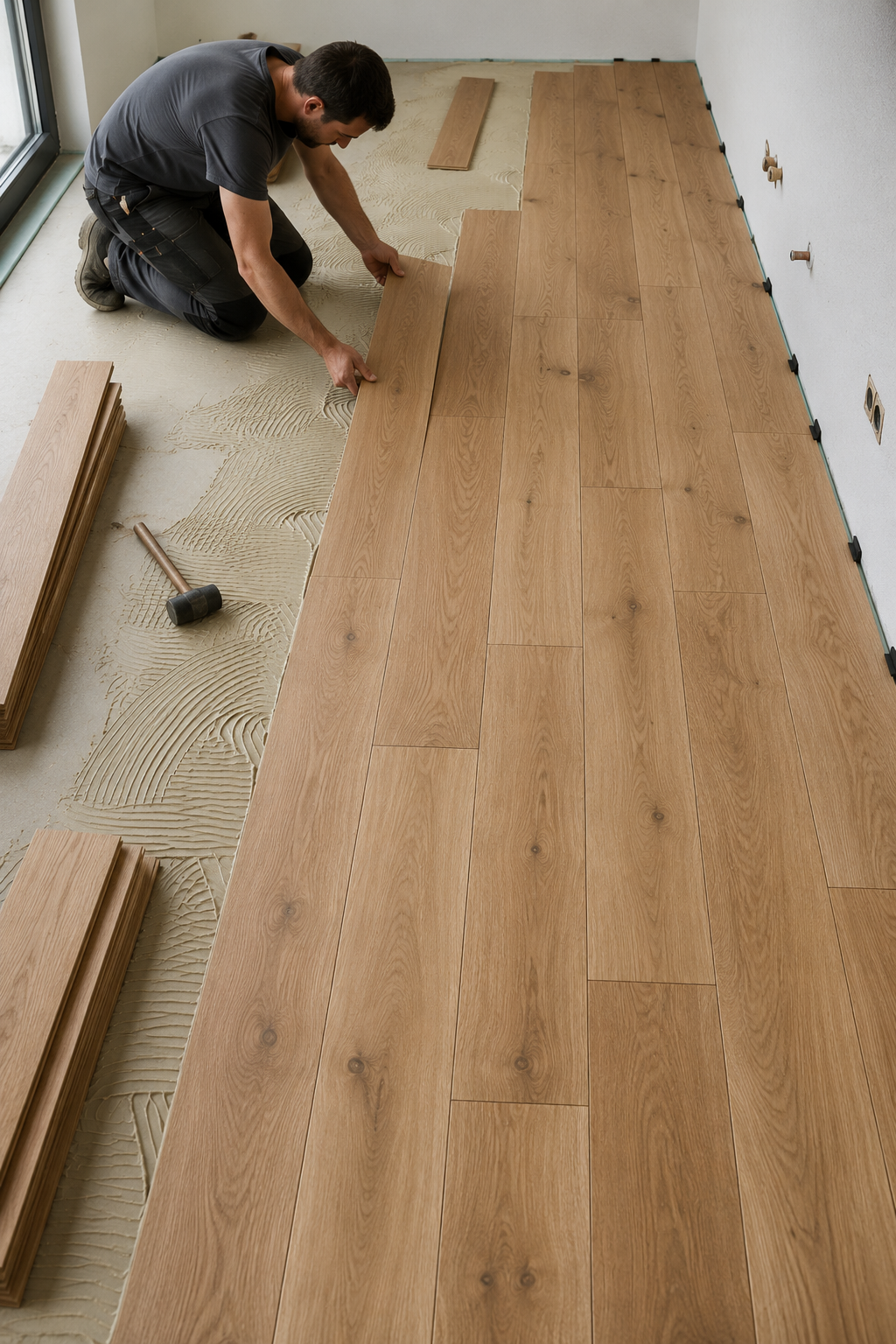
La pose à l'anglaise s'est établie comme référence pour des raisons à la fois pratiques et esthétiques. Elle permet d'utiliser toutes les longueurs de lames issues du débit du bois, sans trier ni recouper systématiquement. Cette souplesse réduit les chutes et optimise le rendement matière, ce qui se répercute directement sur le coût total du chantier. Dans un parquet massif fabriqué à partir de bois naturel, les longueurs varient naturellement d'une planche à l'autre, la pose à l'anglaise est pensée pour accueillir cette variabilité.
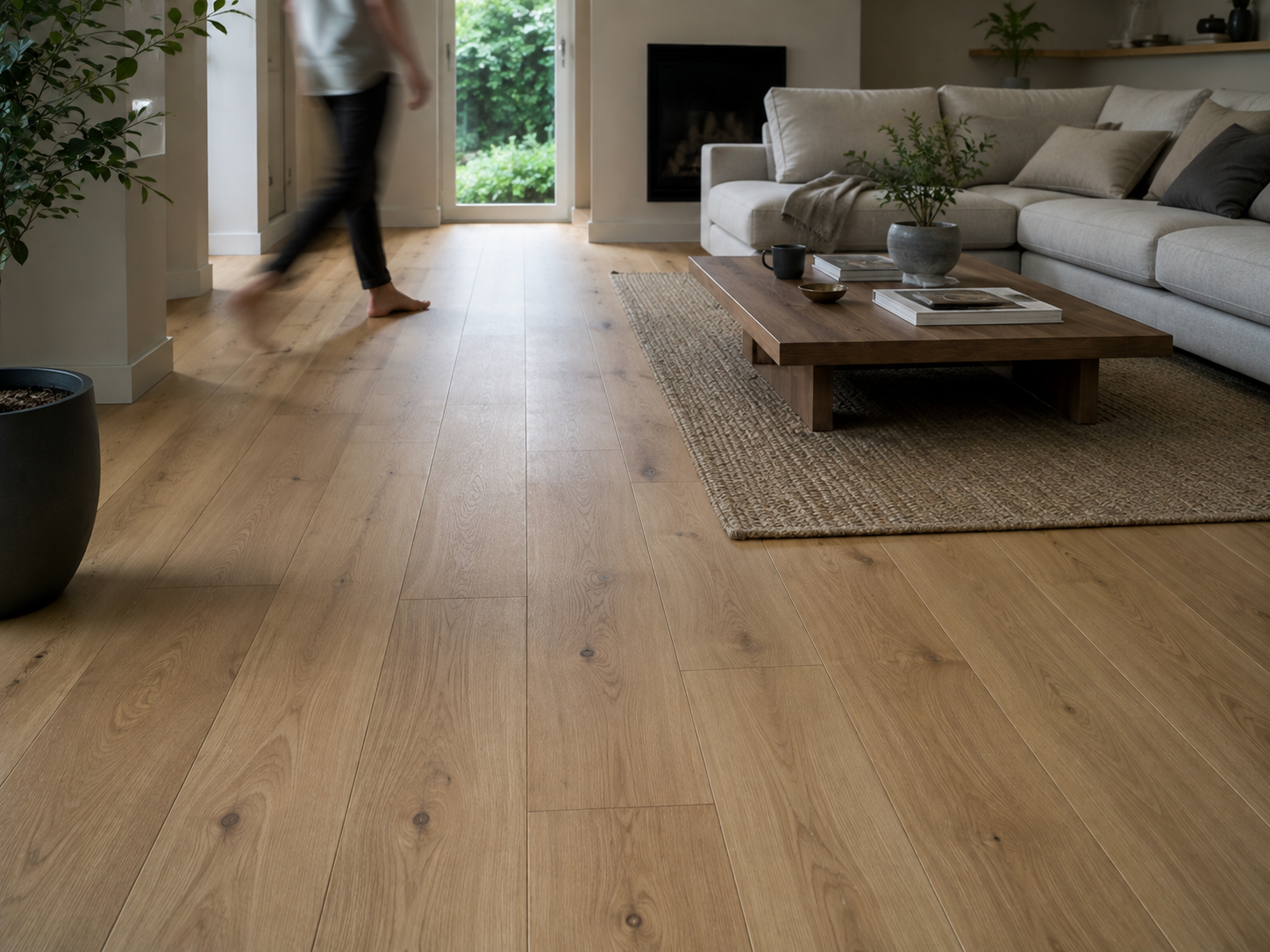
Du point de vue visuel, l'irrégularité des joints confère au sol un aspect naturel et vivant. Le regard circule librement sur la surface sans être arrêté par des lignes de joint mécaniques. Cette qualité est particulièrement appréciée avec les grandes largeurs de lames, où la mise en valeur des veines et de la texture du bois prime sur tout schéma géométrique.
Quels parquets conviennent à cette pose
La pose à l'anglaise est compatible avec la très grande majorité des types de parquet. Le parquet massif s'y prête particulièrement bien, livré par nature en longueurs variables. Posé collé ou cloué sur lambourdes, il donne avec ce motif un résultat d'une grande richesse visuelle, notamment en chêne, hêtre ou noyer. Le parquet semi-massif peut également être posé à l'anglaise, en collé ou en flottant, avec l'avantage d'une meilleure stabilité sur chauffage au sol. Le stratifié, enfin, est quasi systématiquement posé selon ce principe en pose flottante.
Le format des lames influence directement le rendu. Des lames étroites produisent un effet dense et rythmé ; des lames larges donnent un aspect contemporain qui met en valeur le fil du bois. La dimension des planches de parquet est donc un paramètre à considérer conjointement avec le mode de pose.
Ce qu'il faut prévoir avant la pose
Une pose à l’anglaise réussie se prépare avant même la première lame. Le support doit être plan, propre, sec et stable.
L'acclimatation du parquet dans la pièce est recommandé mais pas toujours nécessaire selon le type de parquet. Les joints de dilatation en périphérie de pièce sont obligatoires et seront masqués par les plinthes. Un décalage minimum entre deux joints consécutifs de rangées adjacentes garantit un rendu naturel et évite toute impression d'alignement.
Pose à l'anglaise ou autre motif : comment choisir
La pose à l'anglaise n'est pas la seule option. Dans un intérieur à fort caractère ou une pièce de prestige, des poses plus graphiques comme le bâton rompu ou le point de Hongrie apportent une dimension supplémentaire.
Ces motifs demandent des lames spécifiques, une mise en œuvre plus longue et un budget matière plus élevé en raison des coupes d'angle. La pose à l'anglaise reste le choix le plus polyvalent pour une majorité de projets résidentiels. Elle s'efface derrière le bois lui-même, laissant l'essence, la teinte et la largeur des lames occuper le premier plan.
.jpg)
English-style parquet installation is one of the most widely used methods in parquet flooring. Understated, timeless and suitable for almost all wood species and plank formats, it works equally well in contemporary interiors and older homes. Its popularity comes from a rare combination of benefits: an elegant appearance, straightforward installation and excellent use of the material.
What does “English-style parquet installation” mean?
English-style installation, also known as random-length installation, consists of laying planks of the same width but varying lengths in parallel rows. The end joints of the planks never line up from one row to the next; instead, they are staggered irregularly.
This is precisely what distinguishes it from a regular staggered or brick pattern, where all the planks are the same length and the joints are offset at regular half-length intervals. This second method requires strict selection of plank lengths, generates more offcuts and is therefore more expensive to install.
Why has this installation pattern become so popular?
English-style installation has become a standard for both practical and aesthetic reasons. It allows all plank lengths produced when cutting the wood to be used without systematic sorting or trimming. This flexibility reduces waste and optimises material use, which directly affects the overall cost of the project. With solid parquet made from natural wood, plank lengths naturally vary, and English-style installation is designed to accommodate this variation.
Visually, the irregular joints give the floor a natural and lively appearance. The eye moves freely across the surface without being interrupted by repetitive joint lines. This is particularly attractive with wider planks, where the aim is to highlight the grain and texture of the wood rather than create a geometric pattern.
Which types of parquet are suitable for this installation?
English-style installation is compatible with the vast majority of parquet flooring types. Solid parquet is particularly well suited to it, as it naturally comes in varying lengths. Whether glued down or nailed to joists, this pattern creates a visually rich result, particularly with oak, beech or walnut.
Engineered parquet can also be installed in an English-style pattern, either glued down or as a floating floor, with the added advantage of greater stability over underfloor heating. Laminate flooring, meanwhile, is almost always installed according to this principle as a floating floor.
The plank format directly influences the final appearance. Narrow planks create a denser, more rhythmic effect, while wider planks provide a contemporary look that highlights the wood grain. The dimensions of the parquet planks should therefore be considered alongside the installation pattern.
What should be considered before installation?
A successful English-style installation requires preparation before the first plank is laid. The subfloor must be level, clean, dry and stable.
Acclimatising the parquet in the room is recommended, although it is not always necessary depending on the type of flooring. Expansion gaps around the perimeter of the room are essential and will later be concealed by the skirting boards. A minimum offset between two consecutive joints in adjacent rows helps create a natural appearance and prevents the joints from appearing aligned.
English-style installation or another pattern: how to choose
English-style installation is not the only option. In interiors with a strong architectural character or prestigious rooms, more decorative patterns such as herringbone or chevron can add another dimension to the space.
These patterns require specific planks, take longer to install and involve higher material costs due to the angled cuts. English-style installation remains one of the most versatile options for residential projects. Its understated pattern allows the wood itself to take centre stage, highlighting the species, shade and width of the planks.
FAQ about English-style parquet installation
What is the difference between English-style installation and random-length installation?
They refer to the same installation principle, simply using different names. Both terms describe planks of varying lengths laid in parallel rows with irregularly staggered end joints.
Can solid parquet be installed as a floating floor in an English-style pattern?
No. Solid parquet is not installed as a floating floor, regardless of the pattern. It must be glued to the subfloor or nailed to joists. Engineered parquet and laminate flooring are suitable for floating installation.
Should the planks be laid along the length or width of the room?
As a general rule, planks are laid along the length of the room to emphasise perspective. The direction of natural light can also influence this choice: laying the planks in the direction of incoming light can help highlight the wood grain.
Is English-style parquet suitable for small rooms?
Yes, and it is often more suitable than geometric patterns. In a small room, a complex pattern can visually overwhelm the space. The subtle rhythm of English-style installation allows the room to feel more open. Planks between 90 and 130 mm wide are recommended to maintain balanced proportions.
English-style installation is the most common pattern for wooden parquet flooring. Discover how it works, its different variations, its benefits and the wood species best suited to it.
.jpg)
.jpg)
.png)
How to Install Floating Parquet Flooring?
English-style installation is the most common pattern for wooden parquet flooring. Discover how it works, its different variations, its benefits and the wood species best suited to it.
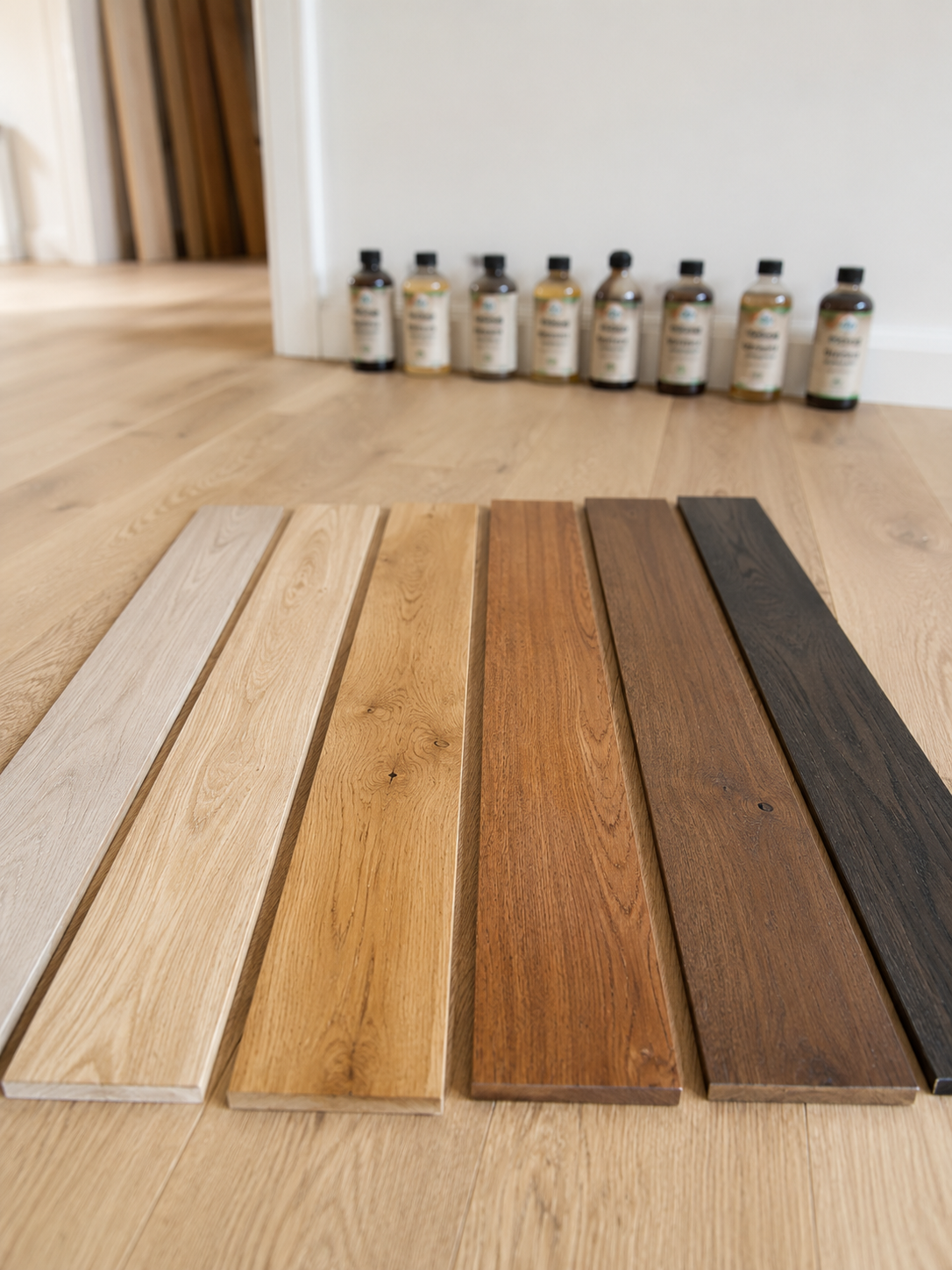
Choose the Right Shade for Your Parquet Flooring
Discover how to choose a timeless parquet shade that complements your interior in Belgium or Luxembourg.
.jpeg)
Hardwood Floor Care: Tips Based on the Type of Finish
The care of a hardwood floor depends primarily on its finish: lacquered, oiled, or waxed. Each type of hardwood floor requires specific products, techniques, and a specific maintenance schedule to prevent scratches, stains, and premature wear.