

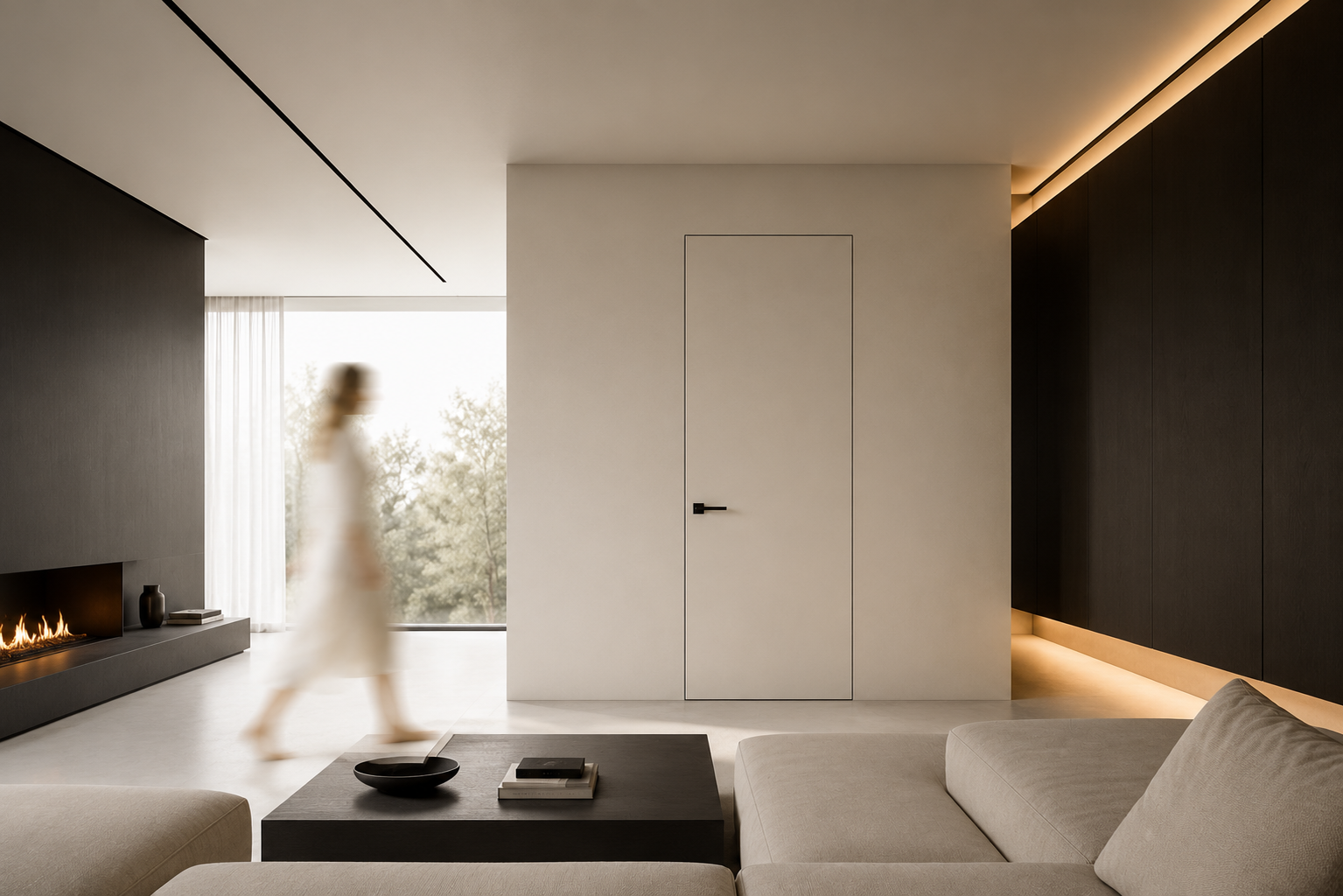
An interior door is more than just a partition between two rooms
It contributes to the acoustic comfort of the home, its overall aesthetic consistency and, in some cases, helps optimise the available space. In the Luxembourg market, where construction...
.jpg)
Matériaux : lequel correspond à quel usage
Le matériau conditionne à la fois l'aspect visuel, la durabilité et le prix de la porte. Plusieurs options coexistent, chacune avec ses avantages propres.
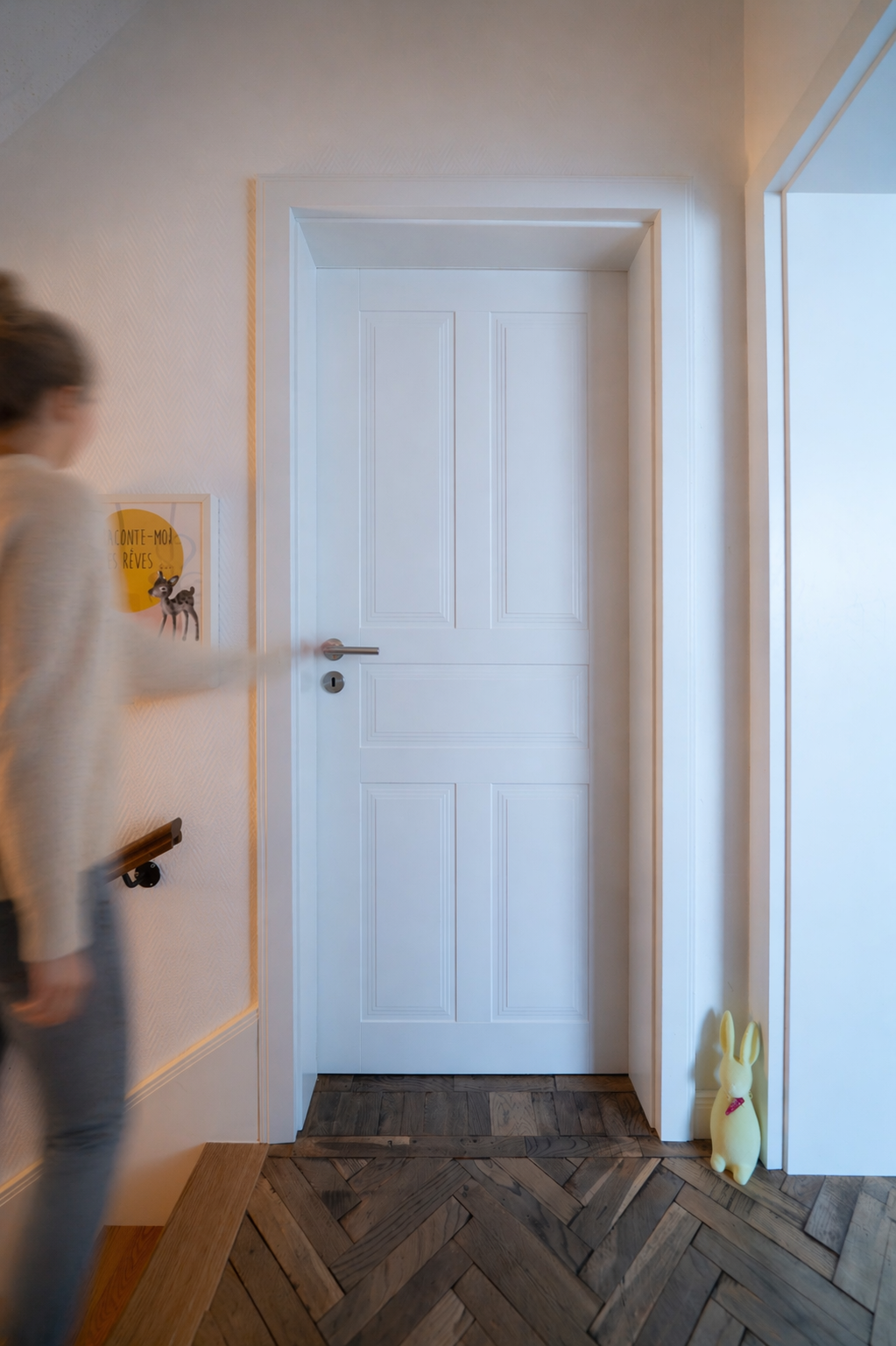
La porte en MDF laqué est la plus répandue au Luxembourg et dans toute la région. Le MDF, ou médium, est un panneau de fibres de bois densifiées, laqué en usine en plusieurs couches. Il offre une surface lisse, homogène et disponible dans une large palette de teintes. Son rapport qualité-prix en fait le choix privilégié pour les projets résidentiels courants, en rénovation comme en construction neuve.
La porte en mélaminé (CPL ou HPL) commence à concurrencer la porte laquée en termes de popularité. Le mélaminé a pour avantage de pouvoir recréer l’effet visuel de quasiment tous les matériaux : bois, béton, etc… Selon la finition choisie, le prix peut également être plus bas qu’une porte laquée.
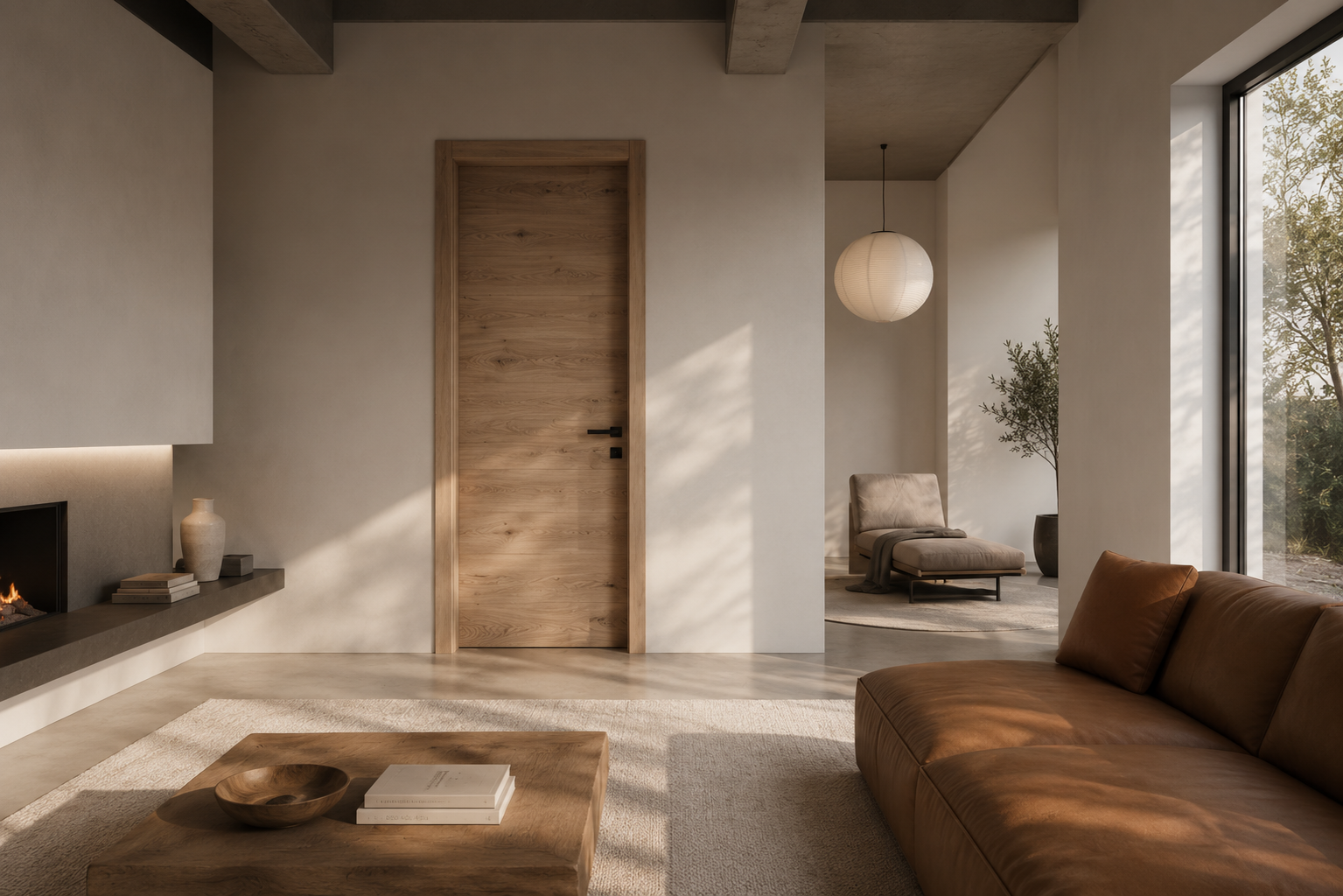
La porte en placage bois constitue une alternative plus noble, proche visuellement du bois massif à un coût inférieur. Une fine feuille de bois véritable est collée sur un panneau support, ce qui permet de conserver les veines et la chaleur du bois naturel tout en maîtrisant les coûts. Le fil du bois peut être orienté horizontalement ou verticalement selon l'effet recherché.
La porte en bois massif reste le matériau de référence en termes de perception qualitative, bien qu'elle soit de plus en plus rare dans les installations contemporaines. Elle convient particulièrement aux projets haut de gamme ou aux logements anciens dont on souhaite préserver le caractère.
Les portes en verre, ou hybrides associant bois et verre, répondent à un besoin précis : faire circuler la lumière naturelle entre les pièces sans supprimer la séparation physique. Le verre peut être clair, sablé ou teinté selon le niveau d'intimité souhaité.
Types de pose : battante, coulissante ou pivotante
Le mode d'ouverture est souvent dicté par la configuration de la pièce autant que par le goût esthétique.
La porte battante est la solution la plus classique et la plus simple à poser. Elle pivote autour d'un axe latéral fixé dans l'huisserie. Son principal prérequis est un espace de débattement suffisant devant ou derrière elle, ce qui peut poser problème dans les couloirs étroits ou les petites pièces.
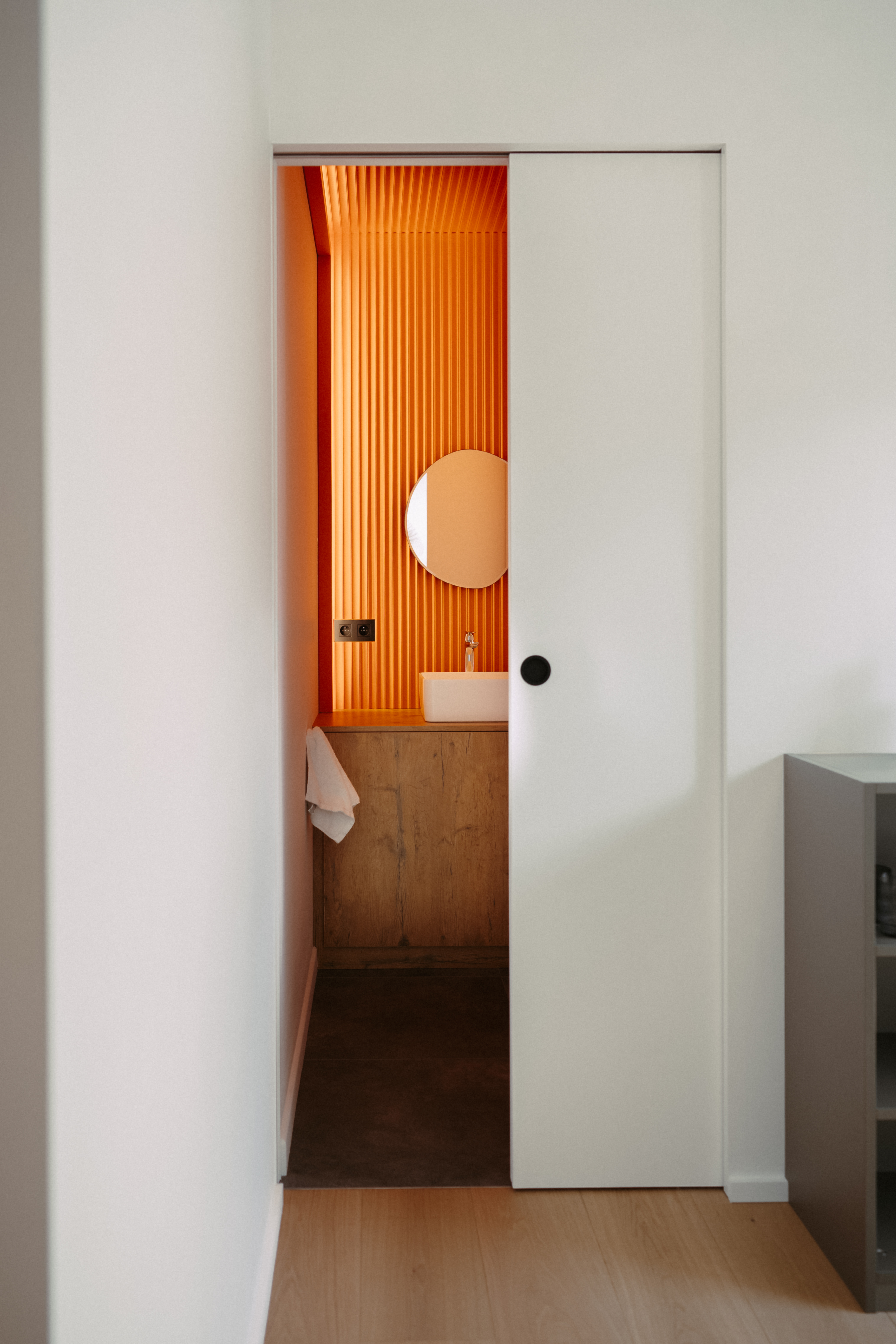
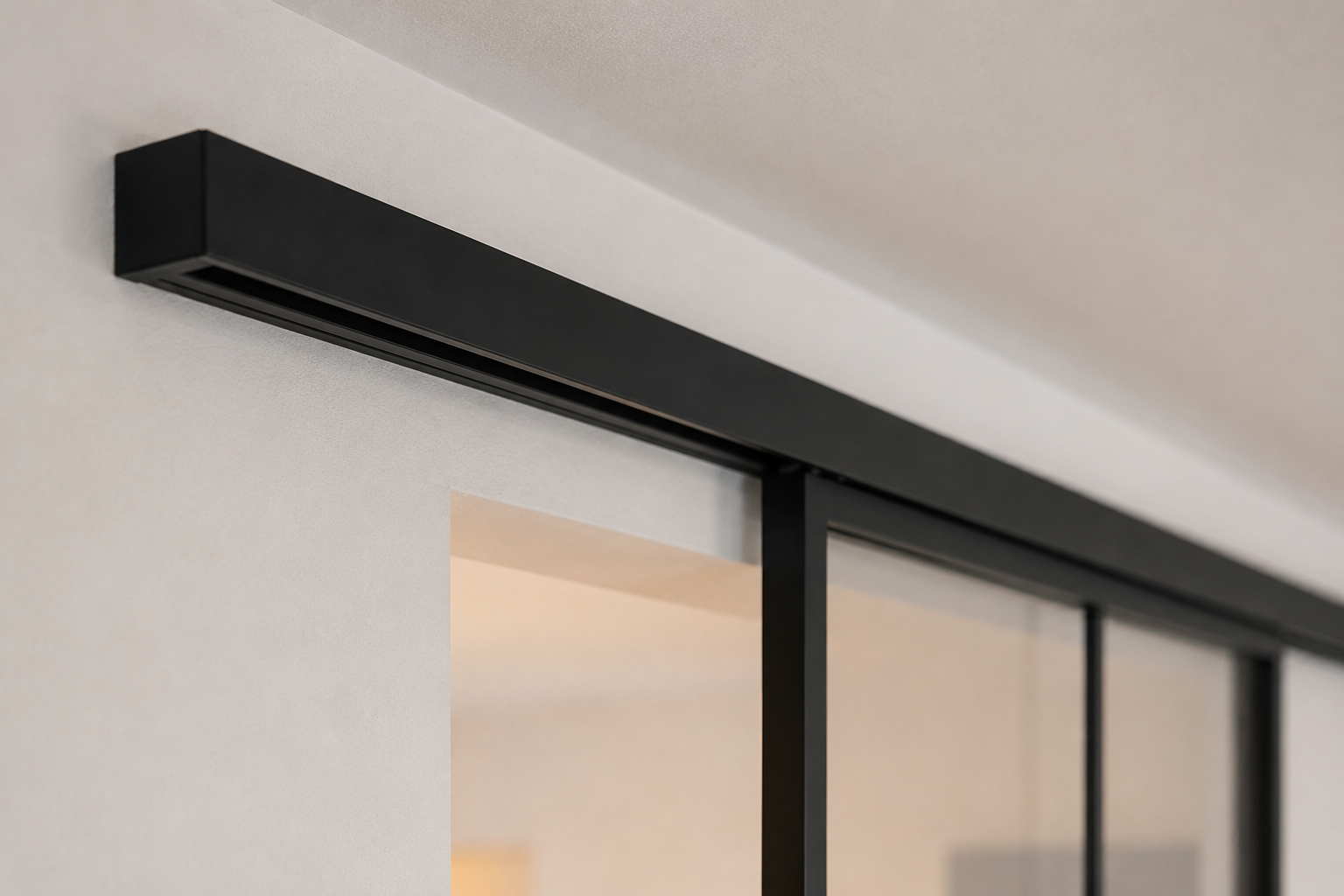
La porte coulissante répond précisément à cette contrainte. En applique sur le mur, elle coulisse le long de la cloison de façon visible. En galandage, elle disparaît dans l'épaisseur de la paroi à l'ouverture, libérant entièrement le pan de mur adjacent. Cette seconde option est à prévoir dès la phase de construction ou lors d'une rénovation importante, car elle implique une intégration dans la maçonnerie ou la cloison.
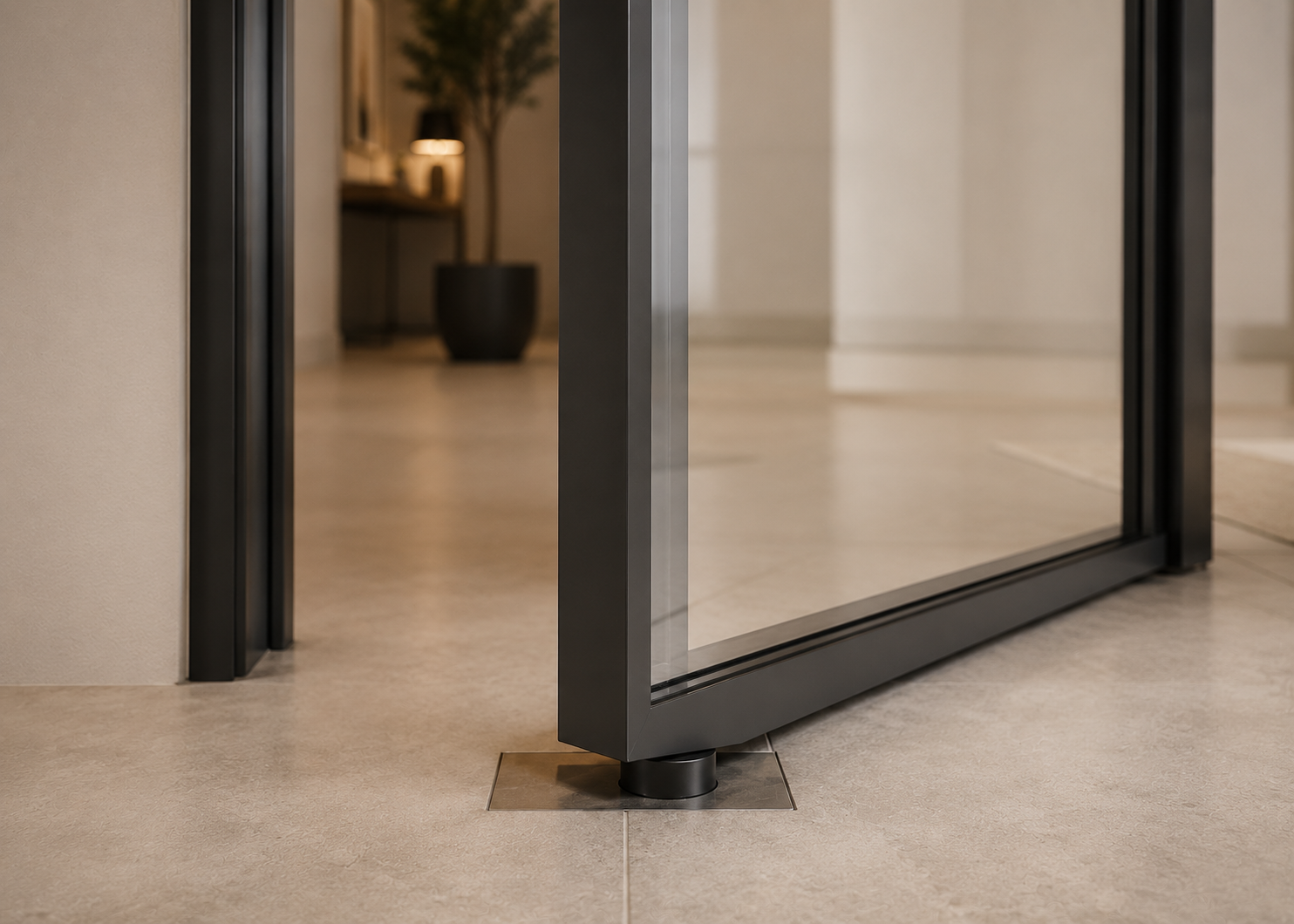
La porte pivotante, plus rare, s'articule autour d'un axe central ou décalé et produit un effet architectural marqué. Elle est souvent choisie pour des raisons esthétiques dans des intérieurs contemporains à fort caractère.
What to check before ordering
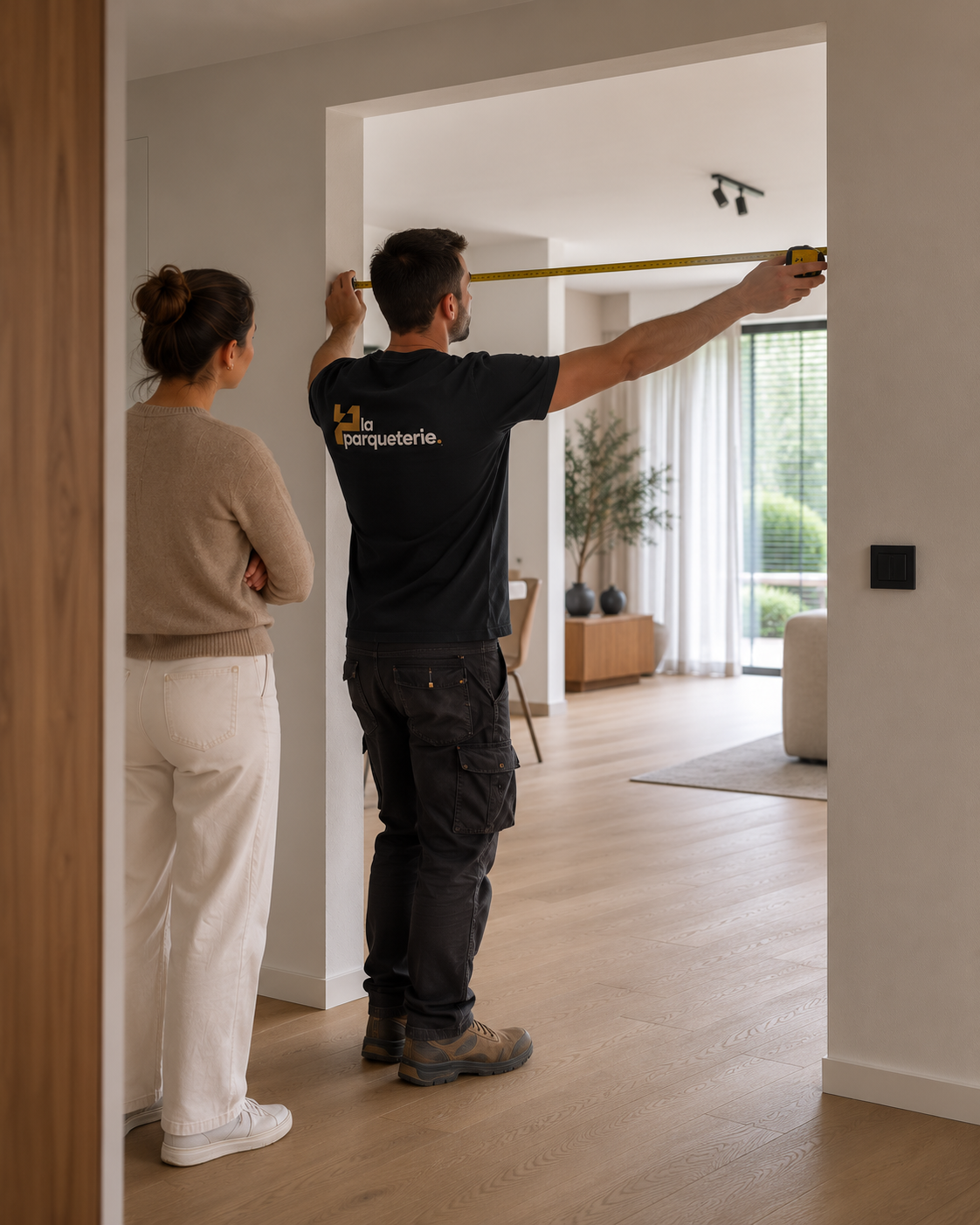
Two technical details should be confirmed before ordering an interior door in Luxembourg: the rough opening dimensions and the opening direction. Standard dimensions in Luxembourg may differ from German, French or Belgian standards, particularly in cross-border projects or older buildings. Whatever the opening, we can adapt the solution to suit the existing configuration.
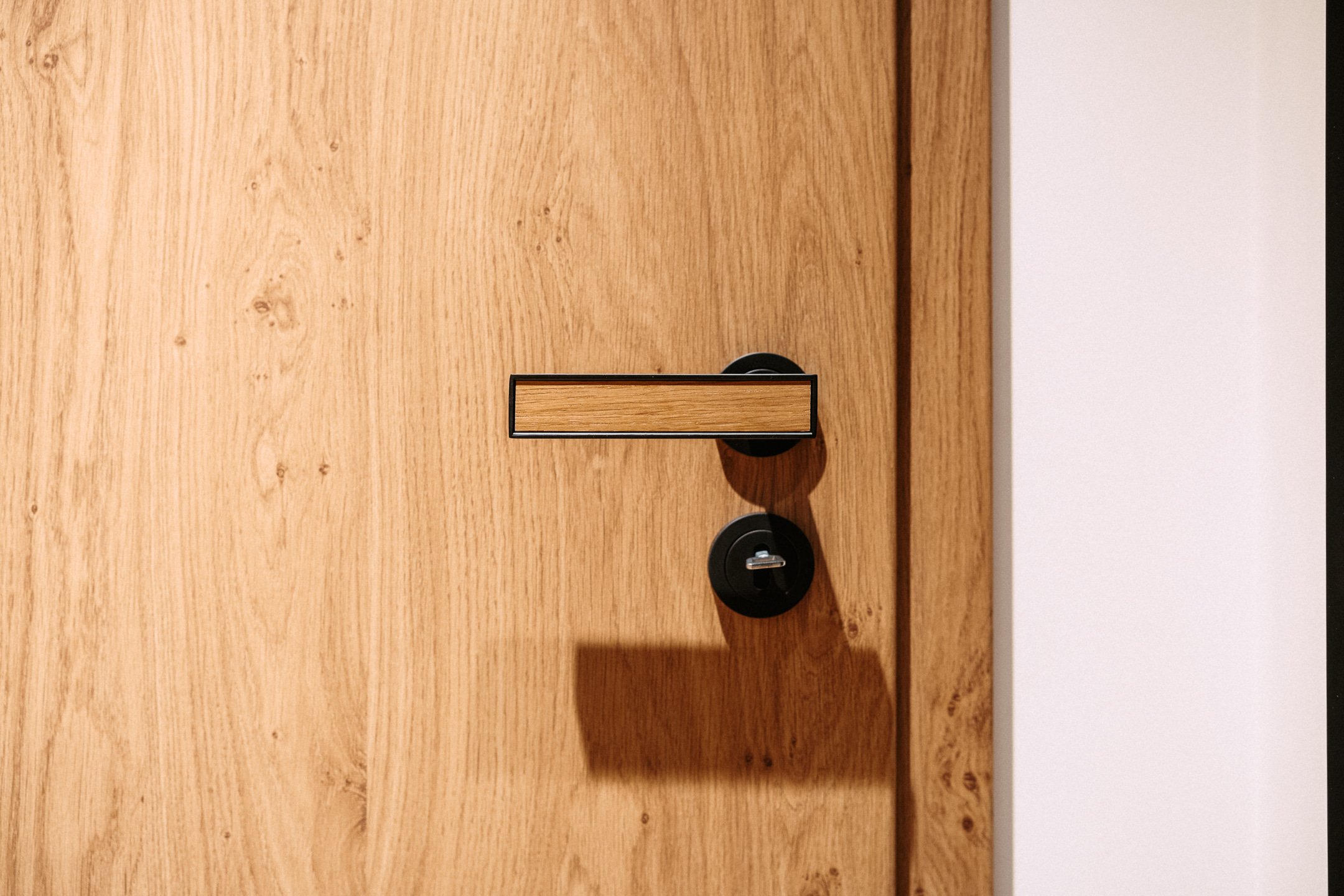
The hardware — handles, locks, hinges and tracks — deserves just as much attention as the door itself. It contributes to the durability of the system and the overall visual consistency. For example, a white door is often combined with black or anthracite hardware to create a more contemporary look. This contrast can give the door a more exclusive appearance without significantly increasing the overall budget.
FAQ about interior doors in Luxembourg
What is the most commonly used material for interior doors in Luxembourg?
In Luxembourg, lacquered MDF and melamine (CPL or HPL) are among the most commonly used materials for interior doors, both in new builds and renovation projects. These solutions are popular thanks to their excellent value for money, wide range of finishes and ability to suit most interior styles.
Lacquered MDF doors offer a perfectly smooth surface and an elegant appearance, while CPL or HPL melamine doors are particularly valued for their durability and resistance to impacts, scratches and everyday wear. The choice between these materials generally depends on the budget, desired aesthetic and level of use in the rooms concerned.
Can a pocket sliding door be installed during a renovation?
Yes, but the existing partition must be modified to accommodate the track and pocket system. This is perfectly feasible as part of a medium- or large-scale renovation, but more complex to add to a finished home without additional building work. In this case, a wall-mounted sliding door is a more accessible and easier-to-install alternative.
What is the difference between a wood veneer door and a solid wood door?
A wood veneer door consists of a core panel, such as chipboard or MDF, covered with a thin layer of real wood. It provides an appearance similar to solid wood at a lower cost.
A solid wood door, on the other hand, is made from solid timber throughout, giving it greater weight and a distinctive natural character.
Do the dimensions need to comply with Luxembourg standards?
Standard door dimensions in Luxembourg may differ from German, Belgian or French standards. Before ordering, it is therefore advisable to measure the rough opening accurately and confirm the desired opening direction with a professional, particularly in older buildings where openings are rarely standardised.
To meet a wide range of requirements, we work with a network of suppliers offering doors in German, Belgian and French standard dimensions. If none of these standard sizes are suitable, our suppliers can also provide custom-made doors. This allows us to find the right solution for virtually any opening and project.
Solid wood, lacquered, glazed or sliding: discover how to choose the right interior doors in Luxembourg to suit your space, style and practical requirements.
.jpg)
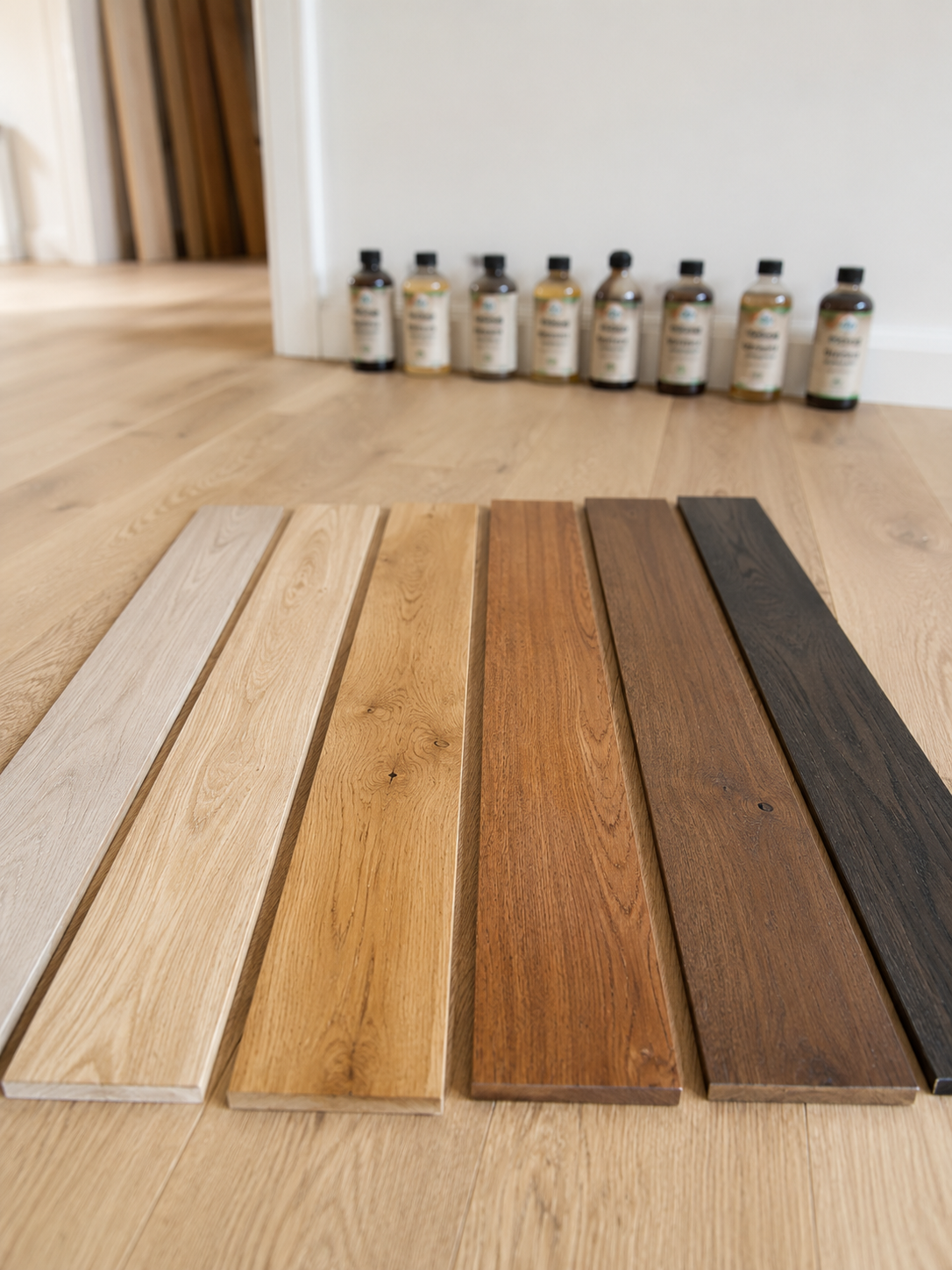
Choose the Right Shade for Your Parquet Flooring
Solid wood, lacquered, glazed or sliding: discover how to choose the right interior doors in Luxembourg to suit your space, style and practical requirements.
.jpeg)
Hardwood Floor Care: Tips Based on the Type of Finish
The care of a hardwood floor depends primarily on its finish: lacquered, oiled, or waxed. Each type of hardwood floor requires specific products, techniques, and a specific maintenance schedule to prevent scratches, stains, and premature wear.
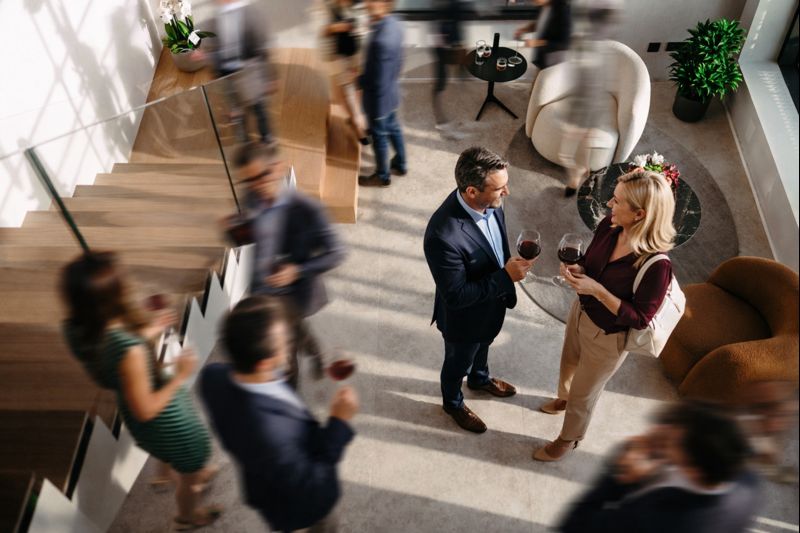
La Parqueterie & In Vino Veritas – 30 Years of Passion
To celebrate the 30th anniversary of In Vino Veritas, La Parqueterie is hosting three days of wine tastings featuring 13 renowned winemakers—the perfect opportunity to explore our showroom over a glass of wine.